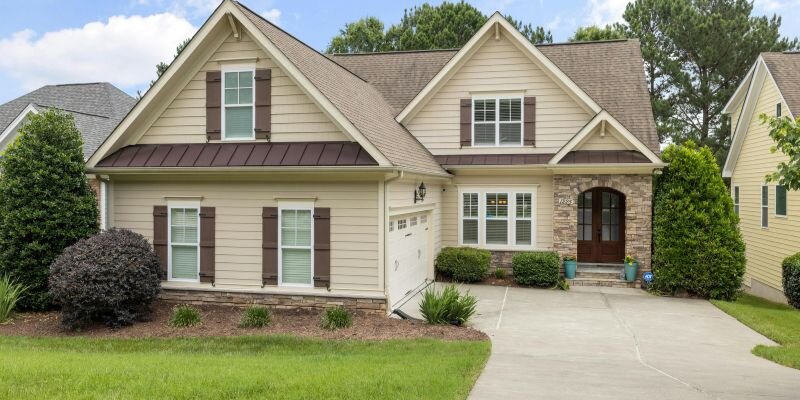
When your aunt in Asheville left you her house on Pack Square, you probably didn’t expect the tax maze waiting ahead. You’re not alone.
I’ve helped hundreds of families navigate this exact situation across the Tar Heel State. From Charlotte’s bustling South End to the quiet mountains of Boone, inherited property raises questions that can be stressful. What taxes will you owe? When are they due? How much will you actually take home?
Here’s the truth: North Carolina makes things easier than most states. But there’s still plenty to know.
Understanding North Carolina Inheritance Tax Laws and Property Transfer Requirements

North Carolina has no inheritance tax, and most inherited assets are exempt from income tax. That’s the good news right upfront.
As of 2013, North Carolina repealed its estate tax (commonly referred to as the “death tax”). This puts the Tar Heel State in a more favorable position for property heirs than states like Pennsylvania or Maryland, which still impose these taxes.
But don’t celebrate yet. While North Carolina won’t hit you with state-level inheritance taxes, federal estate taxes, income tax filings, and capital gains taxes can still apply, depending on the size and complexity of the estate.
Property transfer in North Carolina follows specific requirements. Transferring title ownership from the deceased to heirs involves recording new deeds with the county Register of Deeds‘ office. Whether you inherited a house in Wake County or a cabin in the Blue Ridge Mountains, this step ensures that public records accurately reflect current ownership.
The transfer method matters for tax purposes and becomes especially complicated when dealing with an inherited house when multiple owners are listed on the title or estate. Through a will (probate): Treated as a change of ownership in most cases. Through a trust: May avoid reassessment depending on trust structure. Joint tenancy with right of survivorship: Partial reassessment possible.
Federal Estate Tax Obligations and North Carolina Inheritance Property Sales
Most families won’t sale with federal estate taxes. An individual can leave up to $13.61 million to heirs without facing any federal estate tax for 2024. The federal estate tax exemption is $15 million for deaths in 2026.
For married couples, these numbers double. For married couples, this amount doubles to $27.22 million. Unless you’ve inherited from someone with serious wealth, federal estate taxes won’t touch you.
Only estates that exceed the federal exemption ($13.99 million per person in 2025, and $15 million per person for 2026) are required to file IRS Form 706. This applies to high-value estates and may include lifetime gifts that count toward the total.
If you’re dealing with a large estate, timing matters. The estate must file Form 706 within 9 months of the death (with a possible 6-month extension). But here’s what most people don’t realize: If the estate sells assets before distribution to beneficiaries, any resulting capital gains or losses must be reported on the estate’s income tax return (Form 1041).
Essential Documentation Requirements for North Carolina Inherited House Sales
Getting your paperwork straight saves headaches later. I’ve seen too many sales delayed when someone can’t find the right documents.
You’ll need the death certificate first. Every county clerk’s office, title company, and mortgage lender will want certified copies. Order at least five certified copies right away.
The required estate inventory (commonly due within about 90 days after qualification in many estates) listing assets and their values as of the date of death is crucial for tax purposes. North Carolina law requires an accurate value as of the date of death for estate assets, and that date-of-death figure often serves as the practical starting point for estimating gain.
Property deeds need to be updated through the Register of Deeds office. In Mecklenburg County, this process typically takes 2-3 weeks. Rural counties like Chowan or Tyrrell might move faster.
You will need essential documents like the death certificate, proof of ownership, seller disclosure, and more. The seller disclosure form is required in North Carolina for most residential sales, even inherited properties.
Don’t forget about existing liens or mortgages. Any unpaid property taxes become a lien on the property and are typically the responsibility of the estate. Check with your county treasurer for the current balance before listing.
Property Appraisal and Fair Market Value Determination for Tax Purposes
Getting the right value at death matters more than you think. This number becomes your tax basis for everything that follows.
When a beneficiary inherits property, the asset’s cost basis is adjusted (or “stepped up”) to its fair market value as of the decedent’s date of death. This stepped-up basis can save you thousands in capital gains taxes later.
Professional appraisals work best for tax purposes. While online estimates from Zillow or Redfin give you ballpark numbers, the IRS prefers formal appraisals from licensed appraisers. In the Triangle area, you can expect to pay $400-600 for a standard residential appraisal.
If the property sells soon after death for about the same amount as that documented value, the potential taxable gain may be small; if the sale price is much higher, the estimated gain increases.
Market conditions in North Carolina affect timing. The average effective property tax rate in North Carolina is 0.61%, which is relatively low compared to the national average. But property values have been climbing steadily across most of the state.
In Charlotte’s hot neighborhoods like NoDa or Plaza Midwood, homes can appreciate quickly. A house worth $350,000 at death might sell for $380,000 six months later. That $30,000 difference becomes your taxable gain.
Step-by-Step Basis Calculation Methods for Inherited Property Tax Assessment
The stepped-up basis rule is beneficial. Many inherited assets receive a “step-up ” in basis, which adjusts the asset’s value to its fair market value at the time of the original owner’s death.
Here’s how it works in practice: Your grandfather bought his Outer Banks cottage in 1985 for $75,000. When he passed in 2024, it was worth $450,000. Because of this rule, beneficiaries typically pay capital gains tax only on appreciation that occurs after the inheritance.
So your basis becomes $450,000, not the original $75,000. If you sell for $460,000, you only pay capital gains on $10,000, not $385,000.
Potential gain is generally the sale price minus that date-of-death value, minus allowed selling costs, and certain post-death capital improvements. Selling costs include realtor commissions, title insurance, attorney fees, and transfer taxes.
Capital improvements made after inheritance can increase your basis. If you spend $15,000 on a new roof before selling, you add that amount to your stepped-up basis, further reducing your taxable gain.
Selling costs (such as typical closing costs and commissions) and capital improvements after death can affect the calculation, so the estate should track those items from the start.
Capital Gains Tax Implications When Selling Inherited Real Estate in North Carolina
Capital gains taxes are hit at both the federal and state levels in North Carolina. When you sell inherited real estate in North Carolina, you may face two main types of tax: federal capital gains tax and North Carolina income tax on the gain.
North Carolina taxes capital gains as ordinary income, with no long-term capital gains preference. For the 2026 tax year, the state’s flat individual income tax rate is 3.99%, applied to all taxable income, including profits from selling stocks, real estate, and other assets.
Federal capital gains rates depend on your income and how long you held the property. The IRS also treats inherited property as long-term rega, regardless of how briefly you hold it after inheriting. This means you get long-term capital gains treatment even if you sell immediately.
Long-term federal capital gains rates for 2024 are 0%, 15%, or 20%, depending on your total income. Most middle-class families pay the 15% rate.
You compute your gain by subtracting the stepped-up basis (fair market value at the decedent’s date of death) from the sale price, minus selling expenses. You must report that gain on your Form 1040 in the year you close the sale.
North Carolina treats capital gains as ordinary income. You report them on your NC D-400 individual income tax return.
North Carolina State Tax Exemptions and Deductions for Inherited Real Estate

North Carolina offers limited exemptions specifically for inherited property, but general tax benefits still apply.
For the 2025 tax year, the NC standard deduction is $12,750 for single filers and $25,500 for married couples filing jointly. These deductions reduce your overall taxable income, including any capital gains from inherited property sales.
Capital losses offset capital gains on a dollar-for-dollar basis. If you sold one investment at a $20,000 gain and another at a $12,000 loss, you’d owe tax on only $8,000 of net gain.
Property tax reassessment happens upon inheritance in North Carolina. North Carolina’s rule: Reassessed at transfer. This can dramatically increase annual property tax bills.
If the deceased owner bought the home years ago at a lower price and the property is reassessed at the current market value, the new tax bill could be significantly higher than what they were paying.
You can appeal reassessments if they seem too high. If the reassessment resulted in an assessed value higher than the actual market value, you can appeal just like any other overassessment. The key is having comparable sales data that supports a lower value.
Timeline Considerations and Tax Filing Deadlines for Inherited Property Transactions
Timing affects your tax obligations in several ways. Generally, you pay taxes in the year after the sale and report them on your annual tax return. Federal taxes on capital gains are due by April 15 of the year following the sale, unless you file for an extension.
Selling an inherited property in the Tar Heel State could take up to 6 to 9 months, depending on when probate ends. This timeline affects which tax year your sale falls into.
If you inherit property in January but don’t sell until December, all gains get reported in that same tax year. But if probate drags into the next year, your sale might fall into a different tax year with potentially different rates or income levels.
Quarterly estimated taxes might be required if your capital gains are large. The IRS expects you to pay as you earn income, not just at year-end. If you’re selling a valuable property, consult a tax professional about making estimated payments.
The deadline in North Carolina for property tax appeals is April through June (varies by county). Missing these deadlines means accepting the county’s assessed value.
Estate tax returns have their deadlines. IRS Form 1041 is an income tax return for the estate if it generates more than $600 in income during administration. For heirs dealing with property assets, especially real estate, understanding options like Selling Your Fixer-upper House For Cash In North Carolina can help simplify the process and avoid ongoing carrying costs while the estate is being settled.
Professional Tax Planning Strategies to Minimize Inherited Property Tax Burden

Smart planning can save serious money. I’ll be straight with you: most people don’t think about tax strategy until it’s too late.
If you want to avoid capital gains tax altogether, sell your house faster for cash before its value appreciates. Homeowners who need a quick and hassle-free solution often work with we buy houses in North Carolina companies to reduce holding costs and avoid further market fluctuations. This works especially well in hot markets where property values climb quickly.
Timing your sale strategically matters. If you’re expecting a lower-income year, selling then reduces your federal capital gains rate. Someone jumping from the 15% to 20% capital gains bracket could save thousands.
Capital losses offset capital gains on a dollar-for-dollar basis. If you have losing investments, consider selling them in the same year you sell inherited property to offset gains.
The $250,000/$500,000 home sale exclusion doesn’t apply to inherited property unless you move in and make it your primary residence for at least two years. But for families inheriting modest homes, this strategy can eliminate capital gains.
1031 exchanges don’t work for inherited property unless you first convert it to investment use. But if you inherit rental property, you might exchange it for other investment real estate and defer capital gains.
Companies like Turner Home Team specialize in quick cash purchases that can help you avoid appreciation-related capital gains if you need to sell fast. For heirs dealing with inherited coastal properties, working with cash home buyers in Carolina Beach can simplify the process and help avoid costly repairs or extended listing periods.
Common Tax Mistakes to Avoid When Selling Inherited Houses in North Carolina
Mistake number one: not getting a proper appraisal at death. I’ve seen families use outdated tax assessments or online estimates, only to have the IRS hammer them when it questions their basis.
Inherited properties often have outdated records, such as wrong square footage, extra bedrooms, or improvements that were never made. Could you please request the property record card from your county assessor and verify every detail? Data errors are among the strongest grounds for a tax appeal.
Forgetting to track selling expenses costs money. Realtor commissions, attorney fees, title insurance, and transfer taxes all reduce your taxable gain. Keep every receipt.
Buyers withhold 2.25% of the sale price under NCC. Gen. Stat. § 105-163.13A for nonresident income tax. If you live outside North Carolina but sell inherited property here, expect this withholding. You’ll get credit for it on your tax return, but it affects your closing proceeds.
Mixing up estate taxes and inheritance taxes confuses people. Estate taxes are levied on the total value of a person’s estate upon their death before the assets are distributed to heirs. Inheritance taxes are imposed on the individuals who receive inheritances. If you have additional questions about selling inherited property or the home-selling process, read other FAQ’s here.
Failing to account for state taxes from other jurisdictions can bite you. If you inherit property in one of these states, you might owe inheritance tax there, depending on your relationship to the deceased and the state’s specific laws. Even though you’re a North Carolina resident, Kentucky’s laws apply because the property is located there.
Honestly, most agents won’t tell you the truth: selling inherited property as-is to cash buyers can simplify the entire tax picture. No: noirs, no extended marketing time, no appreciation to worry about.
Frequently Asked Questions
Is There Capital Gains Tax on Inherited Property in NC?
Inherited property receives a “stepped-up basis” equal to the fair market value at the date of death. You only owe capital gains tax on appreciation after you inherit. This is a federal rule that applies in North Carolina. The stepped-up basis often eliminates most or all capital gains tax if you sell shortly after inheriting.
How to Avoid Capital Gains Tax on Selling Inherited Property
This can significantly reduce or eliminate capital gains taxes if the asset is sold shortly afterward. Sell quickly before the property appreciates further, use capital losses from other investments to offset gains, or consider the primary residence exclusion if you move into the home for two years before selling.
What is the $250,000 / $500,000 home sale exclusion?
This federal exclusion allows you to exclude up to $250,000 ($500,000 for married couples) of capital gains from selling your primary residence. For inherited property, you’d need to move in and use it as your primary residence for at least two of the five years before selling to qualify.
How Much Inheritance Is Tax-free in North Carolina?
The state imposes no inheritance tax and no estate tax, allowing beneficiaries to receive assets tax-free at the state level. There’s no limit on inheritance amounts in North Carolina. The tax only applies to estates exceeding $15 million in 2026, so most families inherit in full.
Selling inherited property doesn’t have to drain your bank account in taxes. The key is understanding North Carolina’s favorable laws and planning your sale strategically.
If you’re feeling overwhelmed by the process or just want someone to handle the complexities for you, Turner Home Team has helped countless families sell inherited properties quickly and fairly across North Carolina. Sometimes the simplest solution is the best one. If you’d like to discuss your situation or explore your options, reach out to us for a no-obligation conversation.
If you want to talk through your options, we’re here. No pressure, no obligation. Just honest guidance from someone who’s been helping North Carolina families navigate these situations for years.
Helpful North Carolina Blogs Articles
- Paperwork for Selling Your Home by Owner in North Carolina
- Understanding North Carolina Inheritance Laws
- Selling Your Home Without a Realtor in North Carolina
- Selling a Home with Code Issues in North Carolina
- Selling a House in Foreclosure in North Carolina
- Home Appraisal Repairs In North Carolina Real Estate
- Selling a House With Mold Problems in North Carolina
- How to find off market deals in North Carolina
- Sell House With Foundation Problems Fast In North Carolina
- Who Pays Closing Costs When Selling a House in North Carolina
- Taxes When Selling An Inherited House In North Carolina
- Selling Your Fixer-upper House For Cash In North Carolina
- How Long Should You Live In A House Before Selling It
- How To Sell An Inherited House When Multiple Owners Are Involved
- Selling Rental Property at a Loss And Minimize Your Tax Burden